The Race
| Next Race Date | Sunday 18 April 2027 (provisional; the organiser has not yet published the 2027 date) |
|---|---|
| Course type | One-loop road marathon through 9 city districts, start and finish on Rynek Główny (Main Market Square) |
| Registration | Open (no qualifying time, no ballot) |
| Ballot Opens | Not applicable, open registration |
| Total finishers | 6,669 (2026, event record) |
| Avg race-day temp | Not confirmed. The 2026 edition ran unusually warm for an April race, a real risk factor rather than a one-off |
| Cutoff time | 6 hours from the start line, with an intermediate checkpoint requiring km 21 to be reached within 3 hours |
| Free race-day transport | Not confirmed |
| Course certification | Polish Athletics Federation and World Athletics certified; Competition Rule 31.21 compliant through 2029 |
History
Cracovia Marathon began in 2002, organised by Kraków’s municipal Sports Infrastructure Management Board, and grew into the city’s leading full-distance road race. The name uses the Latin-derived “Cracovia,” matching long-standing city branding rather than the plainer English “Kraków Marathon.” The start and finish moved to the Main Market Square in 2014, a defining operational and visual feature that has held since.
The pandemic interrupted the race’s run, including a postponed 2020 edition. Growth since has been substantial: the 2026 TAURON 23rd Cracovia Marathon, held 19 April, drew a field reported at either 6,883 or 6,916 starters depending on the source, and produced a record 6,669 finishers, from competitors representing 67 countries. Kenya’s Derrick Chege Njoroge won the men’s race in 2:10:55, finishing alone and well clear of the field; Kenya’s Chelangat Sang won the women’s race in 2:33:56. The best-placed Poles were Andrzej Rogiewicz, seventh in 2:25:29, and Monika Brzozowska, third among women in 2:41:37. Wheelchair honours went to Rafał Wilk in 1:09:05, continuing a division the race has run since its first edition.
The course records of 2:09:18 (men) and 2:28:03 (women), both set in 2019, remained unbroken through the 2026 edition. World Athletics recognises the course as Competition Rule 31.21 compliant through 2029, a measurement credential, not a current Label. The race positions itself as Poland’s largest spring marathon and sits within the organiser-branded Złota Seria 42 (with Warsaw and Poznań, since 2024) and the older Royal Running Triad (with the Cracovia Royal Half Marathon and Three Mounds’ Run, since 2016).
The course
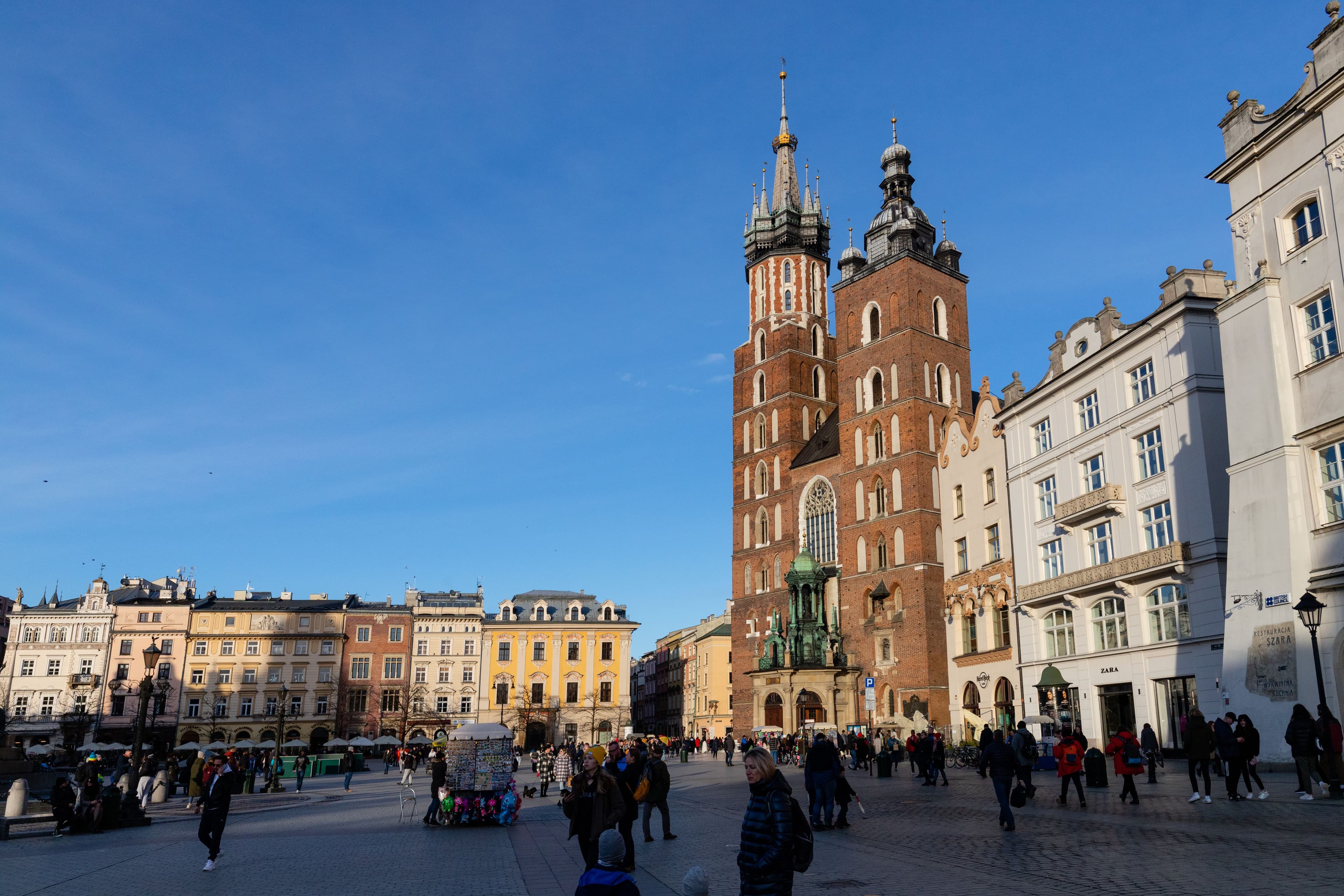
The Cracovia Marathon starts and finishes on Rynek Główny, Kraków’s Main Market Square. In 2026 this meant beneath the Town Hall Tower, a slightly different point on the square than the previous year, since the exact start position shifts within the square from one edition to the next. The confirmed 2026 route ran through nine of the city’s districts across a single 42.195km loop.
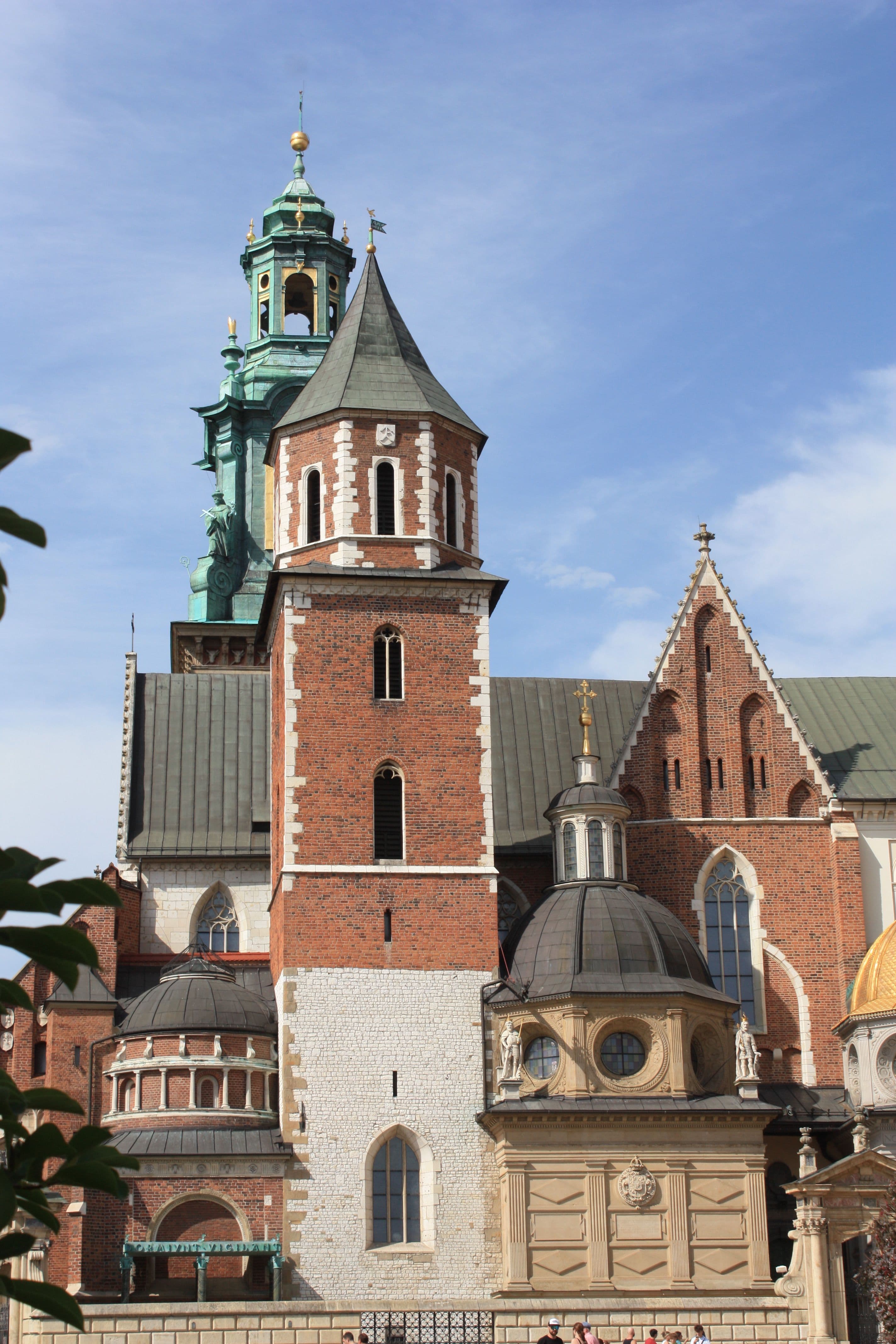
Confirmed landmarks along the way include Wawel Royal Castle, a ramp beneath Wawel itself, a significant stretch along the Vistula boulevards, Nowa Huta’s Plac Centralny im. Ronalda Reagana, the Cracovia and Reyman municipal stadiums, TAURON Arena Kraków, and ICE Kraków Congress Centre. New for 2026 was a westward extension via ul. Świętego Józefa to Przegorzały, along the river.
The surface is predominantly asphalt city road, with cobbled and stone-paved sections through the Old Town and across the Market Square itself. No official total elevation gain has been published. The course is flat; its one sustained rise is a gentle climb of about 18 m from the Vistula back up to the Market Square in the last 4 km. The finish returns runners to the dense, pedestrianised heart of Rynek Główny, where crowd concentration is consistently strongest.
Km 0-6 (estimated): out of the Old Town.The 2026 race started beneath the Town Hall Tower on Rynek Główny, immediately putting runners onto the Market Square’s stone paving before the route threads out through the historic centre’s narrower streets. This opening stretch carries the heaviest crowd density of the race and the least room to manoeuvre, a genuine consideration in a field of nearly 7,000.
Km 6-14 (estimated): into the modern east.The route runs out toward Rondo Czyżyńskie and along Aleja Jana Pawła II, passing TAURON Arena Kraków and the ICE Kraków Congress Centre, Kraków’s modern concert and conference venue. Roads widen here and crowd support thins compared with the Old Town.
Km 14-22 (estimated): Nowa Huta.Around the race’s midpoint, the course reaches Nowa Huta, Kraków’s planned socialist-era district, taking in Plac Centralny im. Ronalda Reagana and the Hala Widowiskowo-Sportowa Suche Stawy venue. This is likely the quietest, least visually dramatic section of the race, a working city stretch.
Km 22-30 (estimated): back toward the river. The route turns west again, passing the Cracovia and Reyman municipal stadiums and Hala 100-lecia KS Cracovia, before heading toward the Vistula.
Km 30-38 (estimated): the Vistula boulevards and Wawel. A long riverside stretch along the Vistula boulevards leads to the ramp beneath Wawel Royal Castle, one of the most visually distinctive sections of the course. New in 2026, the route extended west via ul. Świętego Józefa to Przegorzały before turning back along the river. Wind exposure is highest here; runners should hold effort, not pace, if a headwind develops.
Km 38-42.195 (estimated): back to the Square.The closing kilometres run via ul. Podzamcze, ul. Świętego Idziego and ul. Grodzka, re-entering the Old Town’s dense pedestrian core before the finish on Rynek Główny, a powerful close since runners return to the same historic square where they started, now full of finish-line crowds.
Course Map
The map shows the 2024 course, the most recent route file available: a loop from Rynek Główny out to Nowa Huta and back along the Vistula boulevards past Wawel Royal Castle. The 2026 route changed in places, adding a section west to Przegorzały, so kilometre points on the map will not match the estimated guide above exactly. Tap a marker for details, and scrub the slider or press play to move the orange marker along the course with the elevation profile beneath it.
The most crowded, narrowest section of the race, starting on Rynek Główny's stone paving. Hold position in the opening kilometres.
The course's quietest, most workaday stretch, through Kraków's planned socialist-era district. A good section to settle into rhythm away from crowd noise.
A long Vistula-side stretch culminating in the ramp beneath Wawel Royal Castle, the race's most visually distinctive section and its most wind-exposed.
A return through the Old Town's narrow streets to a finish on the same square where the race began, with the strongest crowd support of the day waiting at the line.
Pacers
Cracovia runs a single mass start at 09:00 with colour-coded start zones assigned by declared finish time, with no time-separated waves, so the usual wave/corral table does not apply cleanly here. Pacers are identifiable by a shirt marked “pacemaker,” their target time, and a balloon showing the same time. Zone changes require contacting the organiser directly.
| Target time | Coverage |
|---|---|
| 2:50 to 5:00 | 35 pacers across eleven target times (2024 list): 2:50, 3:00, 3:15, 3:30, 3:40, 3:50, 4:00, 4:10, 4:20, 4:30, 4:45 and 5:00, identifiable by a shirt marked "pacemaker" and a balloon showing the target time. |
| 6:00 cutoff | A dedicated support group, "Biegnę Wolno, Bo Mi Wolno" ("I Run Slow Because I Can"), pacing to the 6-hour cutoff. |
What to wear
April in Kraków is genuinely variable, and this race does not guarantee cool spring conditions. The 2026 edition ran under unusually warm, sunny skies for the time of year, warm enough that ambulance callouts for heat-affected runners were reported despite hydration points every 2.5km along the course. Do not assume a cool spring morning without checking the specific forecast in the days before the race.
A light disposable top is sensible for a cold start, but be ready to shed it early if the day warms as 2026’s did. No official clothing-donation system has been confirmed. Rain, when it occurs, makes the Old Town’s cobbled and stone-paved sections genuinely slippery, more so than a purely asphalt course, so plan footwear accordingly if wet weather is forecast.
Entry
Cracovia Marathon uses open registration with no ballot. The 2026 registration window opened on 19 November 2025, roughly five months ahead of the 19 April race date. The 2026 field cap was reported at 9,000 entries, against which the organiser recorded 6,669 finishers. Fees are charged in Polish złoty; the full current fee-tier table was not captured in the English sources reviewed. A 10% discount for groups of ten or more runners was mentioned in pre-race material.
Runners with disabilities are exempt from the entry fee entirely, per the organiser’s published policy for the companion Cracovia Royal Half Marathon; this should be confirmed against the marathon’s own current regulations before relying on it, since the source found covers a related but distinct race.
Proxy collection, not bib transfer, is the mechanism confirmed for this race.A runner may authorise someone else to collect their own race pack by naming that person during registration, with edits permitted up to a few days before the event; the proxy must show the runner’s QR code and their own photo ID at collection. This is a distinct mechanism from transferring an entry to a different runner altogether, which the regulations prohibit.
Kraków draws tourists year-round independent of the race, so pairing registration with an early, flexible hotel booking matters more here than the entry process itself.
Fast Runner / GFA Standards
Not applicable as a separate guaranteed-entry mechanism. Elite athletes contact the organiser through a separate process; detailed standards have not been published in English.
Race Weekend
A festival weekend, not just a marathon
Race weekend now includes the OSHEE 10km Night Run on Saturday evening, also starting and finishing on the Main Market Square, the Mini Cracovia Marathon for children, and wheelchair divisions (handbike, rim push, active wheelchair) that have run since the race’s first edition. Combined Saturday and Sunday events drew over 14,000 participants in 2026. Runners staying near the square should plan around Saturday-evening street closures at their hotel, and first-time visitors should expect a full weekend of events.
Expo
The 2026 Race Office (Biuro Zawodów) was located at Synerise Arena Kraków, the Stadion Miejski im. Henryka Reymana, Wisła Kraków’s home ground, in the west stand, ul. Reymonta 20. Opening hours: Friday 16:00-20:00, Saturday 8:00-20:00, Sunday (race day) 7:00-8:00 for bib collection only, with no new registrations possible that morning.
Collection requires a QR code, emailed after payment and again roughly 72 hours before the event, plus photo identification. Proxy collection is available for someone else picking up on a runner’s behalf, provided that person’s details were submitted during registration by the stated deadline, and they present both the runner’s QR code and their own ID.
Race Morning
The 2026 race started at 09:00 on Rynek Główny, with the start gate closing roughly 30 minutes later. Wheelchair competitors started separately for safety, roughly five minutes ahead of the main field.
Because the start sits inside Kraków’s pedestrianised historic core, the approach on race morning is on foot regardless of where a runner is staying. Tram stops around Teatr Słowackiego, Poczta Główna, Stary Kleparz and Dworzec Główny are the useful reference points for anyone arriving from further out.
The overall cutoff is 6 hours from crossing the start line, with an intermediate checkpoint requiring runners to reach km 21 within 3 hours or leave the course. After finishing on Rynek Główny, the easiest return for most runners is on foot to an Old Town hotel. Anyone staying further out should walk beyond the road-closure perimeter before boarding a tram, since the pedestrianised core will not be accessible to trams during the event.
Nutrition on Course
Aid stations run roughly every 2.5km along the course, denser than many European city marathons. Two distinct station types are used: refreshment points offering water only, and nutrition points offering isotonic drink, sugar cubes, chocolate and fruit in addition to water. Runners cannot place personal bottles or gels at any station.
| Approx. km | Water | Other |
|---|---|---|
| 2.5, 7.5, 12.5, 17.5, 22.5, 27.5, 32.5, 37.5 | Yes | Refreshment points: water only |
| 5, 10, 15, 20, 25, 30, 35, 40 | Yes | Isotonic, sugar cubes, chocolate and fruit; no personal bottle placement |
Spectating
Rynek Główny is the single best confirmed spectator location, since the race both starts and finishes there, a genuine two-sighting option without needing to move at all. A spectator willing to move can likely manage two or three further sightings, though exact kilometre timing depends on the specific year’s route.
Itinerary: Start at Rynek Główny for the start, walk south toward Wawel and the Vistula boulevards for a mid-race sighting around km 30-38, then return on foot to the Square for the finish. A second option, if road closures allow, trams east toward Nowa Huta for a sighting around km 14-22 before returning in good time before road closures tighten near the finish.
Post-Race Food
Central Kraków offers many nearby options, though Sunday queues can run long given the size of the field. Pod Aniołami, on Grodzka in the Old Town, serves traditional Polish dishes in a setting suited to a slower, more formal meal. Morskie Oko, on plac Szczepański close to the finish, offers hearty Polish soups, potatoes and meat dishes, popular enough that a wait should be expected. Hamsa, on Szeroka in Kazimierz, serves mezze, breads and vegetable-rich food well suited to a group with mixed dietary needs, though it is roughly a 20-minute walk from the finish on legs that have just run 42.195km.
Where to Stay
The start and finish are both on Rynek Główny, so walking distance to the square is the priority for anyone wanting the shortest possible route on both ends of race weekend.
Stare Miasto / Main Market Square
The easiest start and finish access available. Choose a side street rather than a room directly on the square itself if sleep matters, since Saturday-night noise and race-morning announcements both carry. This is also the highest-priced, busiest area on race weekend.
Kleparz / Kraków Główny
Walkable to the square and well positioned for the airport train and onward excursions. More practical than characterful, with a wide range of hotel options and prices.
Kazimierz
Strong restaurant choice and genuine character, usually 15-25 minutes’ walk to the start. Weekend nightlife can run loud, a real trade-off against its bars and late-opening kitchens.
Stradom, Podgórze and Grzegórzki
Stradom sits between Wawel and Kazimierz, a strong compromise: walkable to the start, historically interesting in its own right, and slightly removed from the noisiest parts of the Old Town. Podgórze, quieter and often better value, sits across the Vistula from the centre; a tram ride or a 30-40 minute walk reaches the start, and bridge access should be checked if closures affect the route on race morning. Grzegórzki offers modern apartments with good tram access, east of the centre, useful if the confirmed route passes nearby.
Recommended areas
Unbeatable proximity to both start and finish, literally on the race's own square. Expect premium pricing and genuine noise on race weekend.
A strong balance of airport-train convenience and walkable start access, without sitting directly on the noisiest part of the square.
A quieter edge-of-centre option; prices rise across the board in spring regardless of which hotel is chosen.
Puts you in Kraków's strongest restaurant district, at the cost of a longer walk back after finishing.
A practical budget base near the station, with simple rooms.
Booking timeline
Cracovia Marathon uses open registration, so there is no single ballot-result date driving a hotel-booking surge. Book a flexible central hotel once your own travel dates are set, since Kraków’s year-round tourist demand, independent of the marathon, is the bigger factor in accommodation pricing here than in many single-purpose marathon destinations. Kraków’s Old Town in particular gets busy around Easter and school holidays, both of which can overlap with the race’s April date in a given year. Flights into Kraków Airport (Balice) should be booked once the following year’s date is confirmed; the airport train to Kraków Główny makes station-area accommodation a genuinely convenient option regardless of which neighbourhood you ultimately choose.
See & Do
April is shoulder season in Kraków: changeable weather and lower crowds than summer, though attractions remain fully open. These sit on or close to the course itself, or a short trip outside the city.
Wawel Royal Castle and Cathedral
Directly on the course, a short walk from the square. The seat of Polish kings and the course’s most visually distinctive landmark. Book timed interior tickets in advance and avoid the more extensive staircases immediately after racing.
Cloth Hall and Main Market Square
At the finish. The Renaissance trading hall at the centre of the square requires almost no extra travel, making it a genuinely low-effort post-race stop.
Kazimierz
15-25 min walk from the square. Kraków’s historic Jewish Quarter, best explored as a gentle district walk; its specific museums involve more standing than the district’s streets themselves.
Wieliczka Salt Mine
A short train or bus ride outside the city. A genuinely significant underground site, but one involving considerable stairs and walking. Despite easy transport access, this is not an ideal choice for the morning immediately after finishing.
Schindler Factory Museum
Podgórze, across the Vistula from the Old Town. An indoor, weather-proof museum with timed-entry booking recommended, covering serious and substantial subject matter; approach it as a deliberate visit.
Read Before you Run
Schindler's Ark
Thomas Keneally
Directly connected to Kraków and the history interpreted at the Schindler Factory Museum on the course's western edge, though its subject matter is serious.
Native Realm: A Search for Self-Definition
Czesław Miłosz
A broader Central European memoir that gives useful context for Kraków's layered identity, from a Nobel laureate closely associated with the city.
After the Race
Cracovia Marathon runs in April, and the fatigue after 42.195km of Old Town cobbles is worth respecting before booking anything demanding. These itineraries stay close to Kraków, or extend further across Poland and into neighbouring countries.
A UNESCO-listed underground mine with genuine walking and stairs; better suited to a day or two after finishing than the morning immediately after the race.
A serious historical visit requiring advance booking and substantial walking. Treat this as a deliberate day, not a casual recovery excursion.
Simple luggage logistics and an extensive indoor museum offering for changeable April weather.
A compact, walkable centre, though cobbled streets are worth limiting on the first day of the extension.
April is mountain shoulder season, with possible snow and mud at altitude; treat this as a town and low-level extension.
A longer international extension for anyone treating the marathon as the start of a wider trip.
Frequently asked questions
Should I stay near the start or the finish?
They're the same place. Cracovia Marathon starts and finishes on Rynek Główny, the Main Market Square, so any Old Town hotel within walking distance of the square works for both ends of race weekend.
How far in advance should I book a hotel?
Book flexibly as soon as your travel dates are set. Kraków draws tourists year-round independent of the race, particularly around Easter and school holidays, so demand isn't solely driven by the marathon itself.
Is there free transport to the start?
No official free-travel entitlement has been confirmed for race entrants. The start sits inside Kraków's pedestrianised historic core regardless, so most runners will approach on foot.
What is the best area to stay?
Stare Miasto for the shortest possible walk to the start, or Kleparz near the station if you'd rather trade a short walk for lower noise and easier airport-train access.
When does the expo open?
The 2026 Race Office opened at Synerise Arena Kraków on the Friday and Saturday before the race, 16:00-20:00 and 8:00-20:00 respectively, with a short race-morning window for bib collection only. Bring a QR code and photo ID.
What is the weather typically like?
April in Kraków is genuinely variable. Cool, even cold mornings are typical, but the 2026 edition ran unusually warm, warm enough to cause heat-related medical incidents. Don't assume settled spring conditions without checking the specific forecast.
How do I get from the airport?
The airport train from Kraków Airport (Balice) to Kraków Główny is the simplest route into the centre; check the current timetable before travelling.
Is there a bag drop?
One is expected given the size of the field, but exact current-year details were not available in the English material reviewed for this guide.
Should I bring a throwaway layer?
Yes, especially for a cold or wet forecast, though be ready to shed it if the day warms as the 2026 edition did. No official clothing-donation system has been confirmed.
How do I get back to my hotel after finishing?
Walk to a central Old Town hotel directly, or walk beyond the road-closure perimeter before boarding a tram if staying further out, since the pedestrianised finish area won't have tram access during the event.