The Race
This is not a flat city marathon through Vaduz. The race starts in Bendern, on the flat floor of the Rhine valley, passes through Vaduz only as a waypoint around km 10.3, and finishes over 20 km further on and roughly 1,350 m higher, in the mountain resort of Malbun. Every section below reflects this point-to-point, split-town, mountain-marathon shape.
| Next Race Date | Saturday 12 June 2027 (provisional; the organiser has not yet published the 2027 date) |
|---|---|
| Course Type | Point-to-point, alpine. Starts in Bendern (approx. 450m elevation), climbs through Vaduz (km 10.3) toward a high point near 1,800m, then descends to finish in Malbun. Start and finish are roughly 20 km apart by road. |
| Registration | Open, direct online entry via datasport.com, open until race morning at 08:45. Limited late/on-site entry Friday evening and Saturday morning in cash. |
| Ballot Opens | Not applicable, open entry |
| Total Finishers | Not confirmed |
| Average Race Day Temperature | Not confirmed for a specific figure; regulations warn of "very large differences" across the race's 450m-1,800m altitude range |
| Cutoff Time | Vaduz checkpoint (km 10.3) closes 10:10; Steg checkpoint (km 25.4) closes 13:00 |
| Free Race Day Transport | Not free public transit, but organiser shuttles run Malbun-Bendern (07:00) and Bendern-Malbun (from 13:00, last departure 17:15) |
| Course Certification | Not confirmed; no World Athletics Label or AIMS listing found for this race |
This marathon crosses most of a country, and starts and finishes in different towns
The LGT Alpin Marathon starts in Bendern, on the flat floor of the Rhine valley at around 450m elevation, and finishes 42.195 km later in Malbun, a mountain resort near 1,800m, around 20 km away by road. There is no “stay near the finish” default here: runners and spectators need to choose deliberately between the start town and the finish town, and the organiser runs dedicated shuttle buses to bridge the gap. Official regulations warn explicitly that the altitude range and 3-to-7-hour duration can bring very large temperature and weather swings within a single race.
History
The LGT Alpin Marathon is organised under the rules of the Liechtenstein Athletics Federation (LLV) and its parent federations. The 2026 edition, on 13 June, is the 25th running of the race: the organiser’s own Hall of Fame results archive lists a result for every year from 2000 to 2026 except 2020 and 2021 (both cancelled for Covid), a clean arithmetic confirmation of the 25th-edition framing.
The race’s defining premise is that it crosses most of the length of Liechtenstein on foot, starting on the flat Rhine-valley floor in Bendern and finishing in the mountain resort of Malbun. The organiser’s own description calls it “the first mountain marathon of the season” each year. Course records: the men’s all-time best is Jonathan Wyatt (NZL), 2:56:27.1, set in 2008; the women’s all-time best is Aline Camboulives (FRA), 3:28:22.6, set in 2015. The 2026 winners were Vitaliy Shafar (UKR), 3:06:17.4, his third consecutive win, and Nadja Kessler (SUI), 3:57:54.3, her fourth.
The event also runs alongside a Half Marathon PLUS (finishing at km 25 in Steg, well past the conventional 21.1 km), a two-person relay called the LGT Staffel 25+17 (split into a 25 km Bendern-to-Steg leg and a 17 km Steg-to-Malbun leg), a children’s race, and a Pink Ribbon charity run. Runners who enter the full marathon but decide during the race to stop at Steg are automatically placed in the half-marathon ranking instead.
The course
The marathon starts at 09:00 at LGT Bank AG in Bendern, and does not return to its starting point: the finish, over 42 km later, is in Malbun. Two timed checkpoints structure the course: Vaduz at km 10.3, where control closes at 10:10, and Steg at km 25.4, where control closes at 13:00 and where the Half Marathon PLUS and the first relay leg both finish. Runners who miss either cutoff are removed from the race, or may continue at their own risk on a specially marked bib without further organiser support. Beyond Steg, marathon runners continue a further 17 km, climbing to the race’s high point before finishing in Malbun, where showers, a festival tent, and the awards ceremony (from around 14:30) are based.
The profile is the race. The first 9 km run the Rhine valley floor between 440 m and 464 m, almost level. From km 10 the road turns uphill and does not relent: 105 m in the kilometre to km 11, then 144 m and 142 m in the kilometres to km 14 and km 16, gradients of 14%. By km 21 the course has reached 1,504 m, which is 1,040 m gained in 11 km. It then gives back about 175 m into Steg at 1,328 m by km 25, climbs again through Triesenberg and up the Valorsch valley, and tops out at 1,784 m around km 34.6. The last 8 km are net downhill: 1,608 m at the Malbun finish, with 125 m lost in the closing 2.2 km.
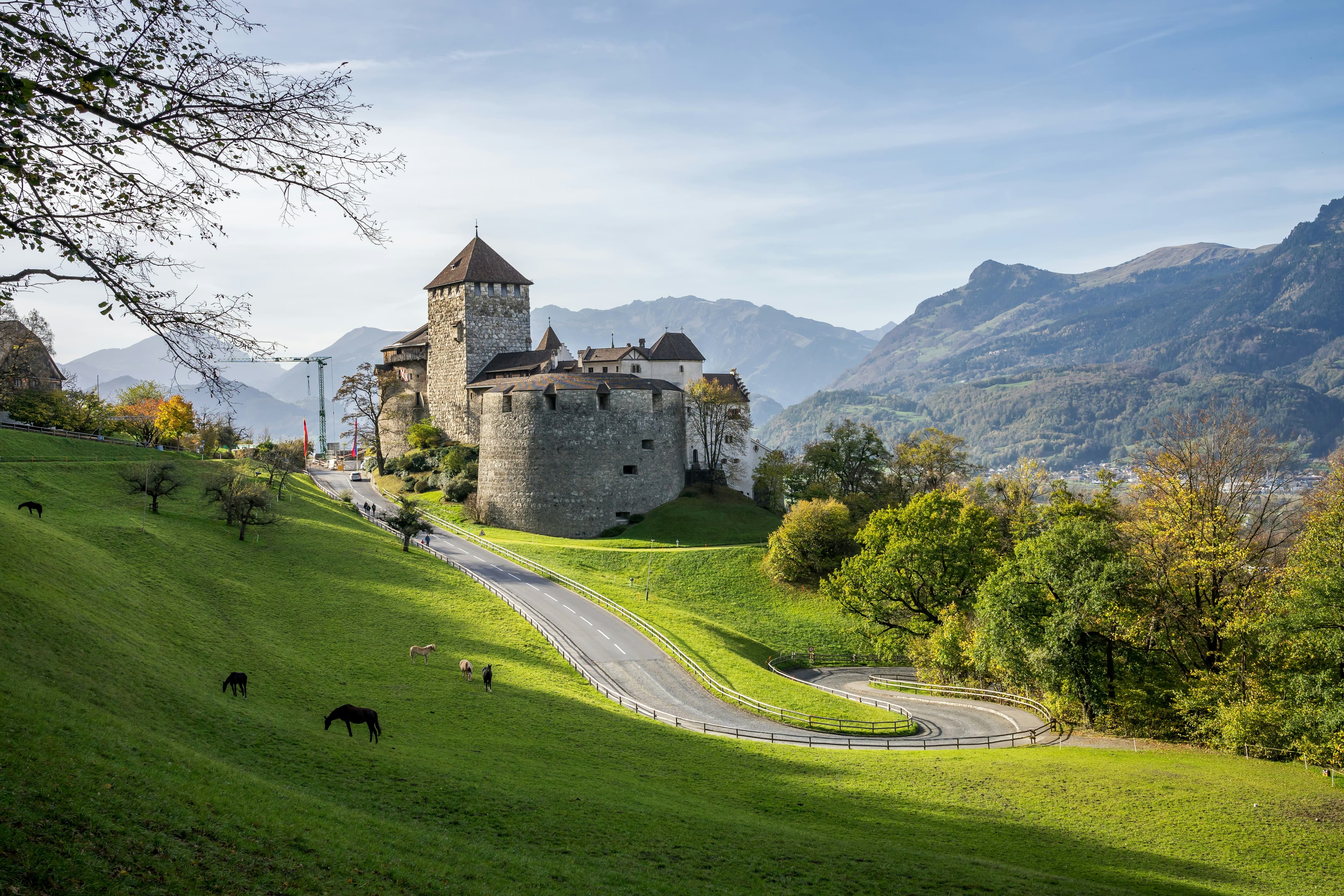
Km 0-10.3: Bendern to Vaduz, the flat opening. The race starts at 09:00 outside LGT Bank AG in Bendern, on the flat floor of the Rhine valley, running flat along the Rhine before passing Vaduz Castle and a short wooded section. The Vaduz checkpoint, at km 10.3, closes at 10:10. These kilometres are the only easy ones on the course.
Km 10.3-25.4: Vaduz to Steg, the climb begins. The course leaves the valley floor at km 10 and climbs 1,040 m in the next 11 km, with three separate kilometres steeper than 13%, before easing off and dropping about 175 m into Steg, a mountain hamlet, by km 25.4. This is where the Half Marathon PLUS finishes and where the first leg of the two-person relay hands off; the Steg checkpoint closes at 13:00, four hours into the race.
Km 25.4-42.195: Steg to Malbun, the high mountain finish. Marathon runners and the second relay leg climb again from Steg, gaining 372 m between km 30.9 and km 34.6 at an average of 10.1% to the high point of 1,784 m, then run 8 km that are net downhill into Malbun at 1,608 m.
Course Map
The map shows the full point-to-point course, plotted from a real finisher’s device recording: from Bendern, through the Vaduz and Steg checkpoints, to the finish in Malbun. Tap a marker for details, and scrub the slider or press play to move the orange marker along the course with the elevation profile beneath it.
A flat, fast opening along the Rhine valley floor, passing Vaduz Castle. The checkpoint here closes at 10:10.
The sustained climb that defines the race, ending at the Half Marathon PLUS finish and first relay exchange in Steg. The checkpoint here closes at 13:00.
The final, highest section of the course, climbing toward roughly 1,800m before descending into Malbun.
Showers, a festival tent, and an awards ceremony from around 14:30, with half-marathon and first-relay-leg finishers shuttled from Steg.
Pacers
No official pacer programme exists for this race, and a conventional finish-time pacer table would misrepresent it: this is an effort-based mountain race with hard checkpoint cutoffs, and even-split road racing does not apply. Pace around the two checkpoint cutoffs, at km 10.3 (10:10) and km 25.4 (13:00), not around a target finish time.
What to wear
Official regulations state explicitly that because the race spans altitudes of 450m to 1,800m and typically takes 3 to 7 hours, very large differences in temperature and weather can occur within a single race. A mid-June start at valley level may be mild, but the climb to near 1,800m brings genuine mountain-weather risk, including wind, rain, and a significant temperature drop, regardless of conditions at the Bendern start. Walking poles and similar aids are explicitly banned and lead to disqualification if used.
Entry
Entry is direct online registration via datasport.com, open until race morning at 08:45, with no ballot. Limited late entry is available in cash only, Friday evening from 17:00 and Saturday morning from 06:30, at the race-number collection point.
Marathon entry costs CHF 99 online until 10 June 2026, rising to CHF 120 for late/on-site entry. The Half Marathon PLUS costs CHF 69 online, CHF 85 late. The two-person LGT Staffel 25+17 relay costs CHF 135 per team online, CHF 170 late. Minimum age is 18 for the marathon; the relay and Half Marathon PLUS allow entry from age 16 with written parental consent.
All finishers receive a functional finisher shirt and a memorial medal, along with cash and prize awards for overall and category winners. Non-starters receive no refund of the entry fee, but a start place can be deferred to the following year at no extra cost with a medical certificate; cancellation insurance is also available at the point of registration via Datasport. Bibs must not be transferred to another person, and folding a bib leads to disqualification.
There is no Boston- or London-style GFA route, and no charity or tour-operator entry pathway was found.
Fast Runner / GFA Standards
Not applicable. No evidence of a GFA or fast-runner entry pathway was found.
Race Weekend
Bib Collection
This race uses race-number (bib) collection; there is no large commercial expo. Collection is at LGT Bank AG, Schaanerstrasse 19, Bendern, on Friday 12 June 2026 from 17:00 to 19:00, and Saturday 13 June from 06:30 to 08:45. Changing facilities and massage are available at the bib-collection point. Runners bringing personal on-course nutrition must clearly label it and hand it in at the designated table by 07:40 on race morning; nutrition on course is otherwise supplied by Sponser Sport Food. A pasta party is held on Friday evening at the Alpen Hotel “Vögeli,” in the finish area near Malbun.
Race Morning
The race starts at 09:00 in Bendern. Runners are issued a labelled bag at bib collection for personal belongings, dropped at the start in the LGT Bank AG car park, then transported to the relevant finish (Steg for the Half Marathon PLUS, Malbun for the marathon and second relay leg).
Given the split start-finish geography, plan race-morning transport carefully: a 07:00 organiser shuttle runs from Malbun via Triesen to the Bendern start for runners and companions travelling from the finish end of the course, with pickup by flagging the bus down at the roadside. Runners staying near the start in Bendern, Schaan or Gamprin have a more straightforward race morning than those based in Malbun or Triesenberg. Parking in Malbun itself on race day is very limited; larger car parks exist around 200 m before the village, or the organiser’s shuttle buses should be used instead.
Nutrition on Course
On-course refreshment stations are confirmed, with nutrition supplied by Sponser Sport Food, though the exact station-by-station list has not been published. Runners wishing to use personal nutrition must label it clearly and hand it in at bib collection by 07:40 on race morning, and must clearly signal their nutrition request to station staff as they approach each aid station.
Spectating
Spectating this race is fundamentally different from watching a city-loop marathon: the course does not return to its start, and the middle and upper sections are real mountain terrain, not roadside. The most practical spectator plan follows the organiser’s own shuttle-bus infrastructure and skips improvised routes.
One option: see the start in Bendern at LGT Bank AG, Schaanerstrasse 19, from 09:00. A second: position in Vaduz, the first checkpoint at km 10.3 (control closes 10:10), a short distance from Bendern and easily reached independently. A third: use the organiser’s shuttle network, from 13:00 Malbun to Bendern, or from 09:15 a relay-specific shuttle from Bendern to the Steg exchange zone, to reach Steg or Malbun for the mid-race and finish action. The last shuttle from Malbun to Bendern departs 17:15.
Post-Race Food
This guide does not yet name restaurants in Malbun beyond the confirmed pasta-party venue. The Alpen Hotel “Vögeli,” which hosts the Friday-evening pasta party, sits in the finish area and is a reasonable starting point for a post-race meal, though its race-day capacity and opening hours were not confirmed.
Where to Stay
This is the section where this race’s split-town geography matters most. Unlike most races, “stay near the finish” and “stay near the start” are genuinely different, several-kilometre-apart recommendations, and the organiser’s own accommodation page splits its suggestions the same way.
Bendern and Gamprin, near the start
The organiser’s own accommodation page lists three specific properties here: b-smart, Deutscher Rhein, and Fernsicht. This area offers the most straightforward race morning, since it removes any dependence on the 07:00 shuttle from the finish end of the course, but the organiser’s own listing notes accommodation supply here is limited.
Malbun and the finish area
The organiser’s own accommodation page lists five specific properties here: the Alpen Hotel “Vögeli” (also host to the Friday pasta party), Hotel Turna, Hotel Gorfion (linked directly to a marathon-specific special offer), Galina, and JUFA. This area suits runners who want the finish line, the showers and the awards ceremony within walking distance, at the cost of needing the 07:00 shuttle (or private transport) to reach the Bendern start.
Vaduz
Liechtenstein’s capital and best sightseeing base, sitting directly on the course at the km 10.3 checkpoint, though not the start itself; runners choosing Vaduz still need to reach Bendern for the 09:00 start.
Buchs SG or Sargans, Switzerland
Confirmed by the organiser’s own accommodation page as further options, specifically a youth hostel in nearby Schaan-Vaduz, and a campsite in Triesen, which the organiser explicitly notes is not served by the marathon’s own shuttle buses and requires the regular line bus instead. Useful primarily as rail-connected bases for international travellers.
Recommended properties
Listed directly on the official accommodation page as a property near the start.
Listed directly on the official accommodation page as a property near the start.
Listed directly on the official accommodation page; also the confirmed venue for the Friday-evening pasta party.
Listed directly on the official accommodation page, with a marathon-specific special offer linked from the organiser's own site.
Listed directly on the official accommodation page; also hosts a race-day finish-area webcam referenced on the official site.
Booking timeline
Book accommodation early. Liechtenstein has a small hotel base overall (the organiser’s own accommodation list names only eight properties across both ends of the course), and Malbun in particular is a small mountain resort where capacity can tighten around a marathon weekend. Entry itself stays open until race morning, but accommodation should not be left that late; book a cancellable room 6 to 9 months ahead, then confirm shuttle-based race-morning transport once travel plans are set.
See & Do
These sit directly on the course, or at either end of it.
Vaduz Castle
Passed directly on the course, around km 10.3. The private residence of Liechtenstein’s ruling prince, a hilltop medieval castle overlooking the capital, visible from the course itself as the race passes through Vaduz on its way toward the mountains.
Vaduz’s Museum Quarter
On the course itself, in central Vaduz. A compact cluster of museums including the Kunstmuseum Liechtenstein and the National Museum, walkable together in a single low-effort outing.
Malbun
At the finish itself. A small mountain resort at around 1,600m, with lift access and hiking trails for anyone extending their stay after the marathon.
Steg and the Valünatal
At the km 25.4 checkpoint. A small mountain hamlet between Vaduz and Malbun, a natural spectating point given its role as a checkpoint and race finish for two of the event’s shorter formats.
The Rhine valley floor between Bendern and Vaduz
The opening km 0-10.3 of the course. Flat, agricultural landscape offering easy, low-effort walking for a visitor exploring the start area instead of the mountain sections further along the course.
After the Race
Vaduz Alpine Marathon runs in June. These itineraries reach the capital passed on the course itself, a neighbouring country, and two onward Swiss cities.
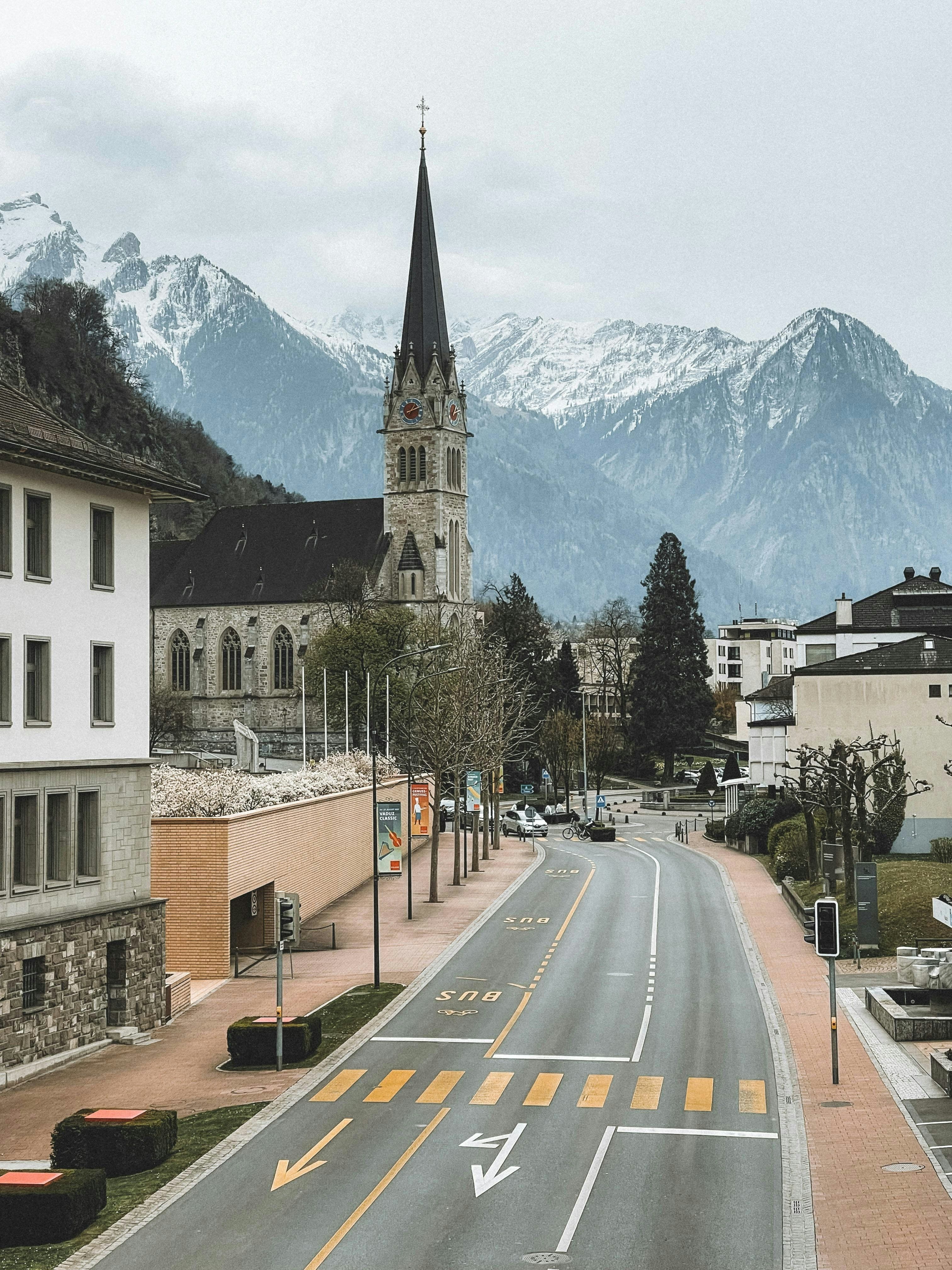
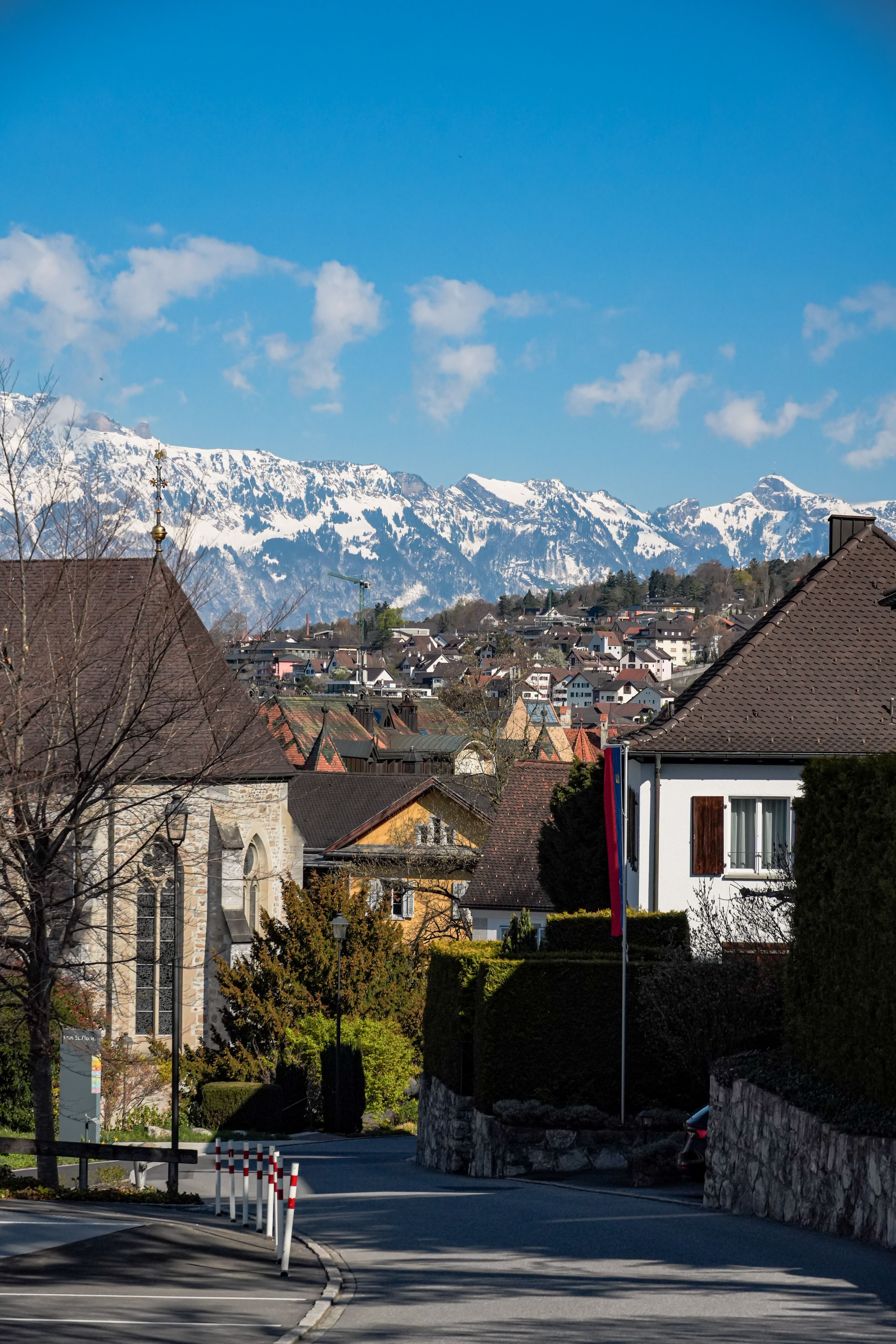
A compact hilltop-castle capital passed directly on the course, worth a proper look on foot once race legs allow, having only been glimpsed at running pace.
A genuinely different country reached in under an hour, a well-preserved medieval Austrian town with a hilltop castle of its own and an old town scaled for an easy day's walking.
A UNESCO World Heritage abbey library in St. Gallen paired with the car-scarce, brightly painted village streets of Appenzell, reached via a short narrow-gauge rail connection.
Switzerland's largest city and easiest international departure hub from Liechtenstein, with a lakefront old town scaled for several unhurried days after a demanding mountain marathon.
Frequently asked questions
Should I stay near the start or the finish?
A genuine choice here: Bendern (start) and Malbun (finish) are around 20km apart by road. Bendern gives the simplest race morning; Malbun puts you a short walk from the finish and the awards ceremony, but requires the 07:00 shuttle to reach the start.
How far in advance should I book a hotel?
6 to 9 months ahead if possible. Liechtenstein has a small overall hotel base, and Malbun specifically is a small mountain resort where capacity can tighten around race weekend.
Is there free transport to the start?
Not free public transport, but a confirmed organiser shuttle runs from Malbun via Triesen to Bendern at 07:00 for runners and companions.
What is the best area to stay?
Bendern or Gamprin for the simplest race morning, or Malbun for finish-line convenience.
When does bib collection open?
Friday 12 June 2026, 17:00-19:00, and Saturday 13 June, 06:30-08:45, at LGT Bank AG, Bendern.
What is the weather typically like?
Highly variable within the same race, given the 450m to 1,800m altitude range and 3 to 7 hour duration.
What is the cutoff time?
Vaduz (km 10.3) closes at 10:10; Steg (km 25.4) closes at 13:00. Runners passing either late are removed from the race.
Is there a bag drop?
Yes. A labelled bag from bib collection is dropped at the start in Bendern and transported to the relevant finish.
Should I bring a throwaway layer?
Yes, mountain-appropriate kit given the confirmed altitude range and the organiser's own warning about large weather swings.
How do I get back to my hotel after finishing?
If staying in Malbun, the finish is on your doorstep. If staying near Bendern, use the shuttle from Malbun, last departure 17:15.