The Race
| Next Race Date | Saturday 15 May 2027 |
|---|---|
| Course type | Point-to-point: starts at Thorpe, follows the Tissington Trail to Parsley Hay, then the High Peak Trail down to a finish at Cromford, near Matlock, entirely off-road on former railway trail infrastructure |
| Registration | Open, direct entry, no ballot found. 2026 early-bird pricing was £33 for UK ARC members and £35 for non-UK ARC members |
| Ballot Opens | Not applicable: open entry, no ballot found |
| Total finishers | Not confirmed. One runner report cited 140 finishers in a past edition, not a current figure |
| Avg race-day temp | Not confirmed. Mid-May in the Peak District generally offers favourable daylight, though the exposed middle section is genuinely weather-dependent |
| Cutoff time | Not published by the organiser |
| Free race-day transport | Not confirmed. Because this is a point-to-point trail marathon between Thorpe and Cromford, do not assume a shuttle exists unless confirmed in the current event pack |
| Course certification | Not stated. No World Athletics label, formal course certificate, or current UKA/AIMS certification has been found |
| Sleeper Train | Not accessible |
A Former Railway Line Through the Peak District, and a Genuinely Self-Sufficient Race
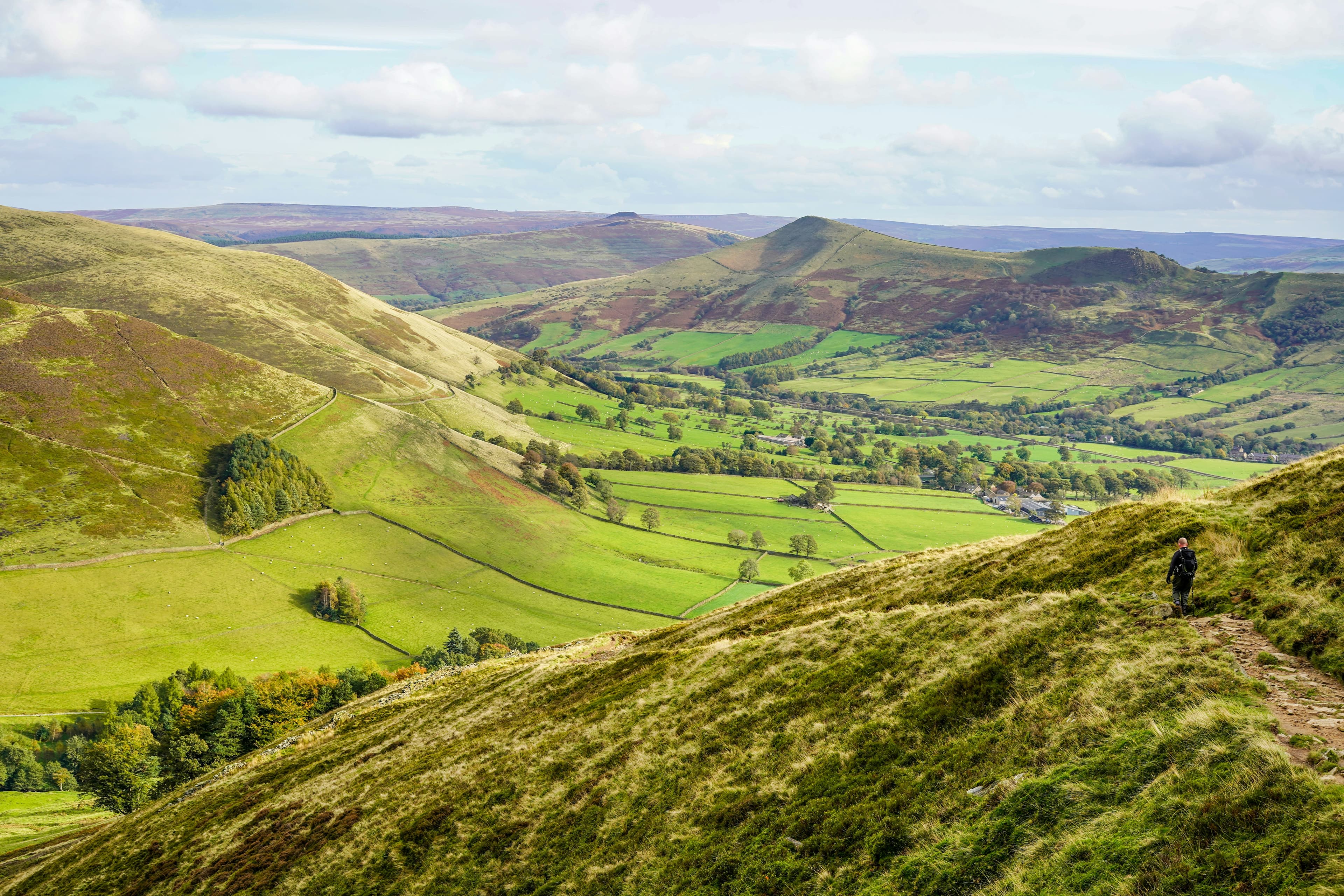
The White Peak Marathon follows two former railway lines through the Peak District, the Tissington Trail from Thorpe to Parsley Hay, then the High Peak Trail descending to Cromford, a route with a genuinely different character from both a city road marathon and a mountain trail race. The former railway gradients make sections runnable, and some listings describe the course as fast, but that reputation deserves a careful reading: the surface is compacted limestone and cinder, not road tarmac, and runner reports consistently describe it as closer to a firm trail marathon than a genuine flat PB course. Race-day support is genuinely more self-sufficient than a big-city marathon, without dense aid stations, pacer groups, barriers or urban crowd energy, and the point-to-point structure between Thorpe and Cromford means runners should confirm logistics for bags and onward travel well before race day; no shuttle should be assumed. This is a race for experienced marathoners who want a quieter, self-managed test on genuinely historic Peak District trail infrastructure, organised by a long-running local athletics club, not a commercial events operator.
History
The White Peak Marathon, now branded the Ian Milne White Peak Marathon, is organised by Matlock Athletic Club as part of the wider White Peak Festival of Running, a Derbyshire club-running institution running since 1977 with three race distances in the White Peak area. This is one of the UK’s longer-running smaller marathons, attached to the club-running scene, not the commercial city-marathon circuit, with a results archive stretching back across multiple years. The race’s distinctive identity comes from its use of the Peak District’s former railway trails, a genuinely different character from both a city road marathon and a mountain trail race: quieter, narrower in places, and dependent on self-contained pacing, with no crowd energy to lean on. Course records, founding-field size and elite standards are not published anywhere reliable, so this page does not state them.
The course
The White Peak Marathon starts at Thorpe, Derbyshire, and follows the Tissington Trail north toward Parsley Hay before joining the High Peak Trail and descending toward a finish at Cromford, near Matlock. The route is point-to-point and largely off-road on old railway infrastructure, giving it a steady, uncrowded practical character: narrow trail sections, little city-centre noise, and long stretches where pacing is managed by feel, not by spectator energy.
The race has been described as fast in some listings, and the former railway gradients do make sections genuinely runnable, with the overall direction favouring the finish, but this reputation should be treated carefully and not oversold: the surface is compacted limestone and cinder underfoot, not road-race tarmac, and runner reports describe it as closer to a firm trail marathon than a genuine road PB course, even though road shoes generally work in dry conditions.
The middle section is exposed to Derbyshire spring weather and can feel remote; in dry conditions this is part of the appeal, but in wet or windy conditions the same sections can become mentally wearing. No numeric elevation-gain figure has been confirmed by the organiser, and the unofficial figures in circulation disagree by more than a factor of two, so none is published here. The shape, though, is not in doubt. The course climbs 152 m over the first 10 km out of Thorpe, at 1.4% and then 1.7%, and reaches the high point of 349 m at km 17.8. It holds between about 310 m and 349 m through the middle third. Then it comes down hard: 91 m in the 2.5 km to km 36.8 at -3.6%, and 150 m more across the last 4.7 km at -3.2%, finishing at 87 m in the Derwent Valley at Cromford. That is 262 m of band, and roughly 240 m of it is lost in the final 8 km.
A listing snippet refers to water stations and on-course provisions, but a current detailed aid-station table was not found; treat this as a self-sufficient smaller race; dense aid support should not be assumed.
Course Map
The map shows the point-to-point route from Thorpe, along the Tissington Trail to Parsley Hay, then the High Peak Trail descending to Cromford, near Matlock. Tap a marker for details, and scrub the slider or press play to move the orange marker along the course with the elevation profile beneath it.
A low-key start without big-city pens or barriers, onto the Tissington Trail.
Former railway alignment, runnable but firm underfoot on compacted limestone and cinder.
Genuinely remote-feeling terrain, weather-dependent, before joining the High Peak Trail’s descent.
A low-key, small-race finish near Matlock, a genuine change of scene from the Thorpe start.
Pacers
Not confirmed. No official pacer programme has been sourced for this race. Given the course’s genuinely runnable but firm trail surface, runners should resist the temptation to bank time early on the favourable-gradient early miles and instead pace conservatively against the surface underfoot.
What to wear
Mid-May in the Peak District generally offers favourable daylight, but the course’s exposed middle section, on former railway trails with little shelter, is genuinely weather-dependent. Road shoes generally work in dry conditions, per runner reports, but the compacted limestone and cinder surface means grippier footwear is worth considering if the forecast turns wet.
Entry
Entry is direct, with 2026 early-bird pricing of £33 for UK ARC members and £35 for non-UK ARC members; all figures should be reconfirmed annually given no 2027 event page was found. No ballot, qualification route, charity route, official tour operators, or elite-entry process was found. Because this is a point-to-point trail marathon, race-day logistics matter more than the price alone suggests: runners need to understand how the organiser moves participants and bags between Thorpe and Cromford, but a full race-day guide was not located. No refund, transfer or deferral policy has been sourced for this guide.
Fast Runner / GFA Standards
Not applicable. White Peak Marathon has no evidence of a dedicated Good for Age, elite or fast-runner entry pathway. All entrants use the same standard entry route.
Race Weekend
Expo
Not confirmed. No expo information has been sourced for this race. Many UK club marathons of this scale use posted numbers or race-day collection instead of a conventional expo; check the live Matlock AC site closer to any newly confirmed race date.
Race Morning
The race starts at Thorpe, Derbyshire, at 10:00am, and finishes at Cromford, Cromford Wharf or Cromford Meadows, near Matlock, a genuinely different location from the start. Because this is a point-to-point trail marathon, logistics between the two points matter significantly, but a full race-day guide covering how runners, spectators or bags are moved between Thorpe and Cromford was not located. Do not assume a shuttle exists between start and finish unless confirmed in the current event pack, and do not assume this will feel like a major road race with dense aid and logistics support.
Nutrition on Course
A listing snippet refers to water stations and on-course provisions, but a current detailed aid-station table, including nutrition partner, gels, sports drink, personal bottle service and toilet locations, was not found. Write this as a self-sufficient smaller race unless a current event guide confirms exact water points.
Spectating
This is genuinely not an easy multi-point spectator marathon. The course uses rural trails, not a dense urban loop, so the most realistic spectator plan is to base at the finish, Cromford, Cromford Wharf or Cromford Meadows, or at one accessible trail crossing if the organiser publishes safe access details. Multiple sightings by public transport are not realistic without careful local planning and should not be promised to spectators.
Itinerary A: Base at Cromford, the finish area, for the most reliable single sighting. No confirmed accessible mid-course trail crossing has been sourced; do not promise multi-point spectating without organiser confirmation.
Post-Race Food
Cromford and nearby Matlock, close to the finish, offer the practical post-race option for runners not travelling further into the Peak District. No specific named restaurant has been sourced with confidence for this guide; Cromford and Matlock’s dining options are the practical area to check closer to race week.
Where to Stay
The White Peak Marathon’s start, at Thorpe, and finish, at Cromford near Matlock, sit in genuinely different locations, so the marathon’s own logic favours staying near the finish for post-race convenience and solving race-morning transport to the more rural start separately.
Cromford and Matlock
Closest to the finish, offering the best combination of finish convenience and public-transport access.
Wirksworth
A short distance from Cromford, a further Peak District option worth considering, though accommodation availability should be checked given how quickly small Peak District supply can fill in May.
Ashbourne
Closer to the Thorpe start, suits runners prioritising race-morning simplicity over finish-area convenience.
Bakewell and Buxton
Both larger Peak District towns, offering a wider spread of accommodation and restaurants for runners combining the race with a broader Peak District weekend.
Recommended areas
The best combination of finish convenience and public-transport access, though small Peak District supply can fill quickly in May. No specific property has been sourced with confidence for this guide.
Suits runners prioritising race-morning simplicity over finish-area convenience. No specific property has been sourced with confidence for this guide.
A wider spread of accommodation and restaurants for runners combining the race with a broader Peak District weekend. No specific property has been sourced with confidence for this guide.
Booking timeline
Book accommodation earlier than for a typical city race: small Peak District accommodation supply can fill quickly in May. Cromford and Matlock, closest to the finish, should be prioritised for early booking, with Bakewell or Buxton as wider-supply alternatives. No specific race-weekend price premium has been sourced for accommodation around this event.
See & Do
These attractions sit close to the finish at Cromford and Matlock, the wider Derwent Valley Mills World Heritage landscape.
Cromford Mills
At the finish itself. The site of Richard Arkwright’s original cotton mill, part of the Derwent Valley Mills World Heritage landscape, a compact, low-effort visit close to the finish.
Derwent Valley Mills World Heritage landscape
Around Cromford and Matlock. The wider industrial-heritage landscape the race finishes within, worth a slower, properly paced look either side of race day.
Matlock Bath
Near Cromford. A small Victorian spa town with a genuine seaside-resort feel despite being inland, a good low-effort stop near the finish.
Chatsworth
By bus or taxi from Matlock or Bakewell. One of England’s grandest country houses, reachable from the finish area, a strong extension for runners with an extra day.
Easier Peak District trail walks
Gentler waymarked walks in the wider Peak District, recommended as optional given the marathon’s own demanding trail surface; not strenuous hill walks for the day immediately after the race.
Read Before you Run
A History of the Peak District Moors
David Hey
Hey's history of the Peak District's moorland and industrial landscape gives runners genuine context for the former railway trails the marathon's own course follows, and for the mill towns of Cromford and Matlock at the finish.
After the Race
The White Peak Marathon runs in May. These itineraries stay close to Cromford and Matlock, suited to legs recovering from a demanding trail marathon.
A low-effort day exploring the Derwent Valley Mills World Heritage landscape and the small spa town of Matlock Bath.
One of England's grandest country houses, a strong extension for runners with an extra day near the finish.
Gentler waymarked walks recommended as an optional, low-effort extension given the marathon's own demanding trail surface.
Frequently asked questions
Should I stay near the start or the finish?
The finish, at Cromford near Matlock. The start at Thorpe and the finish are genuinely different locations, and the marathon’s own logic favours proximity to the finish for post-race convenience, with race-morning transport to Thorpe solved separately.
How far in advance should I book a hotel?
Earlier than for a typical city race. Small Peak District accommodation supply, particularly around Cromford and Matlock, can fill quickly in May.
Is there free transport to the start?
Not confirmed. Because this is a point-to-point trail marathon between Thorpe and Cromford, do not assume a shuttle exists unless confirmed in the current event pack.
What is the best area to stay?
Cromford or Matlock for the best combination of finish convenience and public-transport access, or Bakewell and Buxton for a wider spread of accommodation if combining the race with a broader Peak District weekend.
When does the expo open?
Not confirmed. No expo information has been sourced for this race; many UK club marathons of this scale use posted numbers or race-day collection instead.
What is the weather typically like?
Not confirmed. Mid-May in the Peak District generally offers favourable daylight, though the course’s exposed middle section is genuinely weather-dependent.
How do I get from the airport?
Not confirmed. This is a rural Peak District location requiring careful travel planning.
Is there a bag drop?
Not confirmed. No bag-drop arrangement has been sourced for this race, and given the point-to-point course, this is a genuinely important logistical question to confirm before travelling.
Should I bring a throwaway layer?
Sensible, given the course’s exposed middle section on former railway trails, where conditions can feel genuinely remote and weather-dependent.
How do I get back to my hotel after finishing?
Runners staying in Cromford or Matlock can walk or take a short taxi back from the finish. Those staying in Ashbourne, Bakewell or Buxton should plan a car journey, since no dedicated race-day shuttle has been confirmed for this event.