The Short Cut
- More people want in. The London ballot now attracts more than 1.33 million entries for a single race. New York City's general lottery fell to approximately 1% acceptance the same year.
- London's response to that demand: the 2027 TCS London Marathon will span two days, 24 and 25 April, with 100,000 participants across both days; the elite and age-category fields are separated by sex, with women's elites on one day and men's elites on the other.
- The marathon fits modern motivations unusually well: measurable, shareable, and difficult enough to feel meaningful, but still accessible to everyday runners willing to train.
- Research on 830 multi-marathon runners across 40 countries found 93% said multi-marathoning benefited their mental health.
- The World Marathon Majors are acting as a participation engine, turning individual races into a collection and destination running into an identifiable pursuit.
The Scale of the Shift
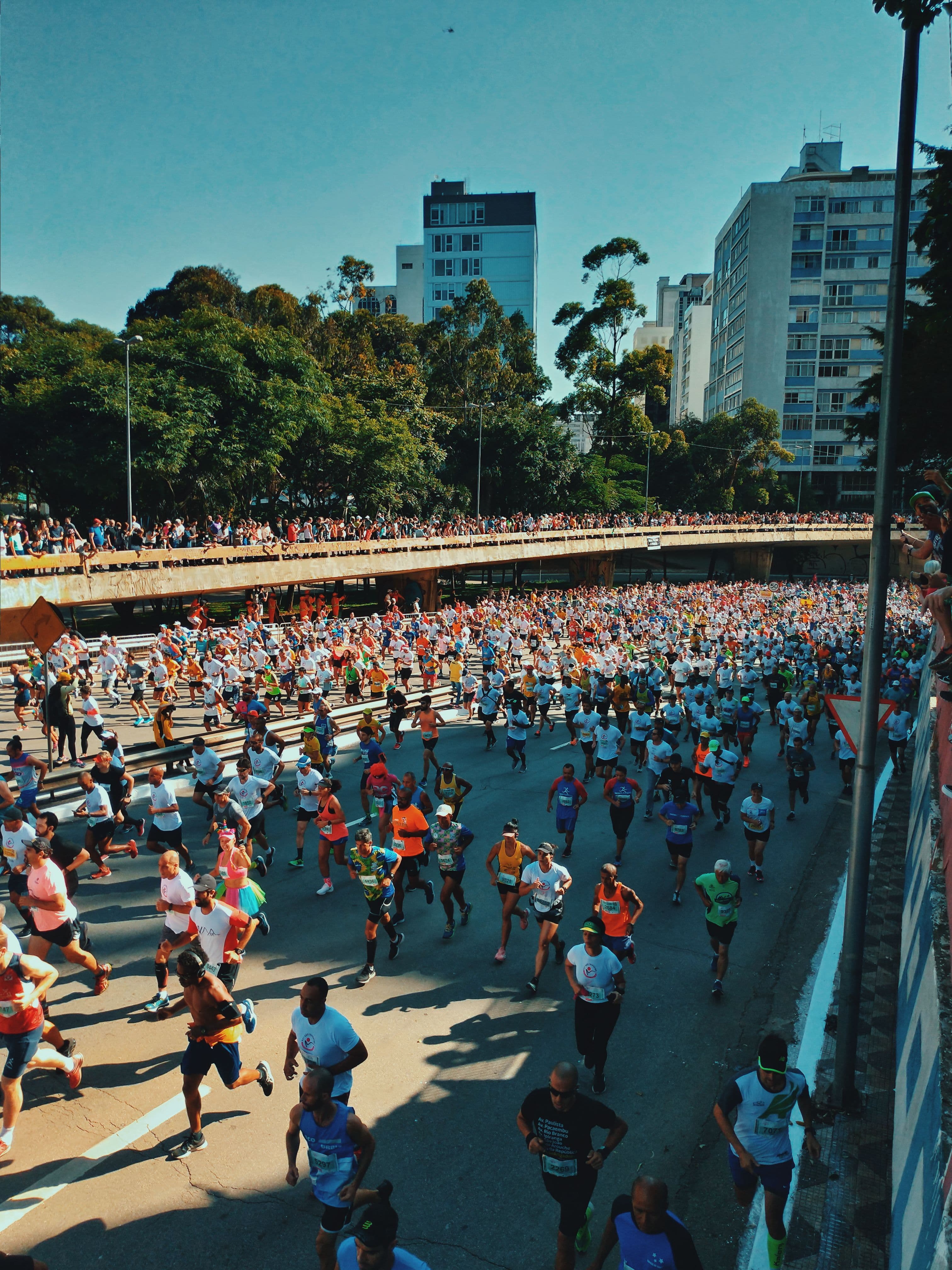
Marathon running used to be a test of grit for a relatively narrow slice of the running world. Now it is a global growth story, with mass-participation fields swelling, ballot demand soaring, and runners treating the distance as both a personal challenge and a cultural event.
The headline trend is simple: more people want in. A 20% year-on-year increase in marathon runners on Strava was reported in 2023, and ballot demand for London has passed 1.33 million entries for a single race cycle. That scale matters because it shows the marathon has crossed from specialist endurance event into mainstream aspiration.
Part of the appeal is that the marathon fits modern motivations unusually well. It is measurable, shareable, and difficult enough to feel meaningful, but still accessible to everyday runners willing to train for it. The sport is being powered by a combination of wellness culture, social media, run clubs, and a post-pandemic appetite for structured goals and real-world community.
Who Is Running Now
One of the most significant changes is who is entering. Research on multi-marathoning drawing on a global sample of 830 respondents from 40 countries found an average age around the early 50s for men and late 40s for women, showing that marathon culture spans well beyond young adults chasing personal bests. The same study found 60.7% of respondents were men and 39.3% women, and noted that motivation becomes more travel- and socially-driven with age.
Data from the New York City Marathon, where more than 1 million runners finished between 1999 and 2024, tells a similar story. The most represented age group for both sexes was 40 to 44. The marathon is increasingly a midlife and later-life event, not just a young runner's rite of passage.
Gender patterns are shifting too. Recent data from the London Marathon shows the 2026 ballot nearly equal between men and women, with more than a third of UK entries from runners aged 18 to 29. That combination of youth and near-parity suggests the next wave of marathon growth may be even more diverse than the one that preceded it.
Geography and the Power of the Majors
The sport is still anchored by the big city marathons, but participation is widening well beyond the traditional strongholds. The World Marathon Majors are the clearest symbol of that global map: Tokyo, Boston, London, Berlin, Chicago, New York, Sydney, and now Cape Town. Their draw is not only prestige; it is the way they make marathon running feel like a worldwide series rather than isolated events.
New York City Marathon data underlines the international spread. The United States remains the biggest source of finishers, but Italy, France, Germany, the UK, Canada, Mexico, and Japan all appear prominently across different years. The sport is locally rooted but increasingly international in both participation and ambition.
Performance geography also shifts with age. In the NYC analysis, runners from Kenya and Ethiopia dominate younger age groups, while the strongest performances among older runners increasingly come from the United States, Japan, Germany, and Switzerland. The fastest masters marathoners look nothing like the fastest open-category runners: it is a different competitive landscape entirely.
The Majors as a Participation Engine
The World Marathon Majors have become a significant engine of marathon growth because they turn participation into a journey of collection. Runners no longer ask only whether they can finish a marathon; they ask how many Majors they can complete, and in what order.
That changes behaviour in meaningful ways. The Majors create destination runners, medal chasers, and repeat entrants willing to travel for the experience and the story. As the circuit expands (Sydney joined in 2025, Cape Town confirmed as the eighth Major), its cultural influence grows too, making marathon running feel more global, more aspirational, and more legible to new runners who might not have otherwise considered the distance.
The most direct expression of that demand pressure came in June 2026. London Marathon Events announced that the 2027 TCS London Marathon would span two days, Saturday 24 and Sunday 25 April, with 100,000 participants. The one-off format separates the elite fields by sex: women's elite, female para-athletes and age-category women run one day; men's elite, male para-athletes and age-category men run the other. The mass participation field is not split by gender. The decision was a direct response to 1.33 million ballot entries and is projected to raise over £150 million for charity, against a previous one-day record of more than £90 million. CEO Hugh Brasher described it as "our most ambitious evolution to date." When the world's best-attended marathon can no longer absorb its own demand in a single day, the scale of what the sport has become is difficult to overstate.
What the Research Says
Academic work helps explain why the boom has held. The multi-marathoning study found that motivations shift over time: younger and less established runners lean towards improvement and competition, while older runners weight travel and social connection more heavily. It also found that 93% of respondents said multi-marathoning benefited their mental health, reinforcing the sense that marathon running now sits at the intersection of performance and wellbeing.
A 2026 analysis of 1,009,839 NYC Marathon finishers from 1999 to 2024 found participation rising over time (with a temporary pandemic dip), and that age and nationality became much more predictive of performance among top finishers than across the full field. The sport's depth is increasing: the field is broadening, and the competitive strata within it are intensifying simultaneously.
Related reading: For where to channel this enthusiasm, How to Get Into the World Marathon Majors covers how to navigate entry systems across all seven Majors. The individual race pages for London, Berlin, Tokyo, Chicago, New York City, Boston, and Sydney cover entry, logistics, and neighbourhood guides for each. The World Marathon Majors: A Runner's Travel Guide compares all seven side-by-side.
The Extra Mile
"Demographics, culture and participatory nature of multi-marathoning: an observational study highlighting issues with recommendations." PLOS One (2024). Surveys 830 participants across 40 countries. Particularly useful for understanding age, gender, motivation, health perceptions, and the rise of repeat marathoners.
"Athletes' origin trends in participation and performance of master runners in the New York City marathon (1999-2024): a sex- and age-group analysis." Scientific Reports (2026). Analyses 1,009,839 finishers across 25 years, tracking how performance geography shifts with age.